


19 Mar Potholes and Wheel Alignment: What Barrie Roads Are Doing to Your Car Right Now
Potholes and Wheel Alignment in Barrie
If you’ve been driving in Barrie this spring, you’ve already felt it. Potholes and wheel alignment go hand in hand this time of year, and right now Barrie roads are delivering both problems at once.
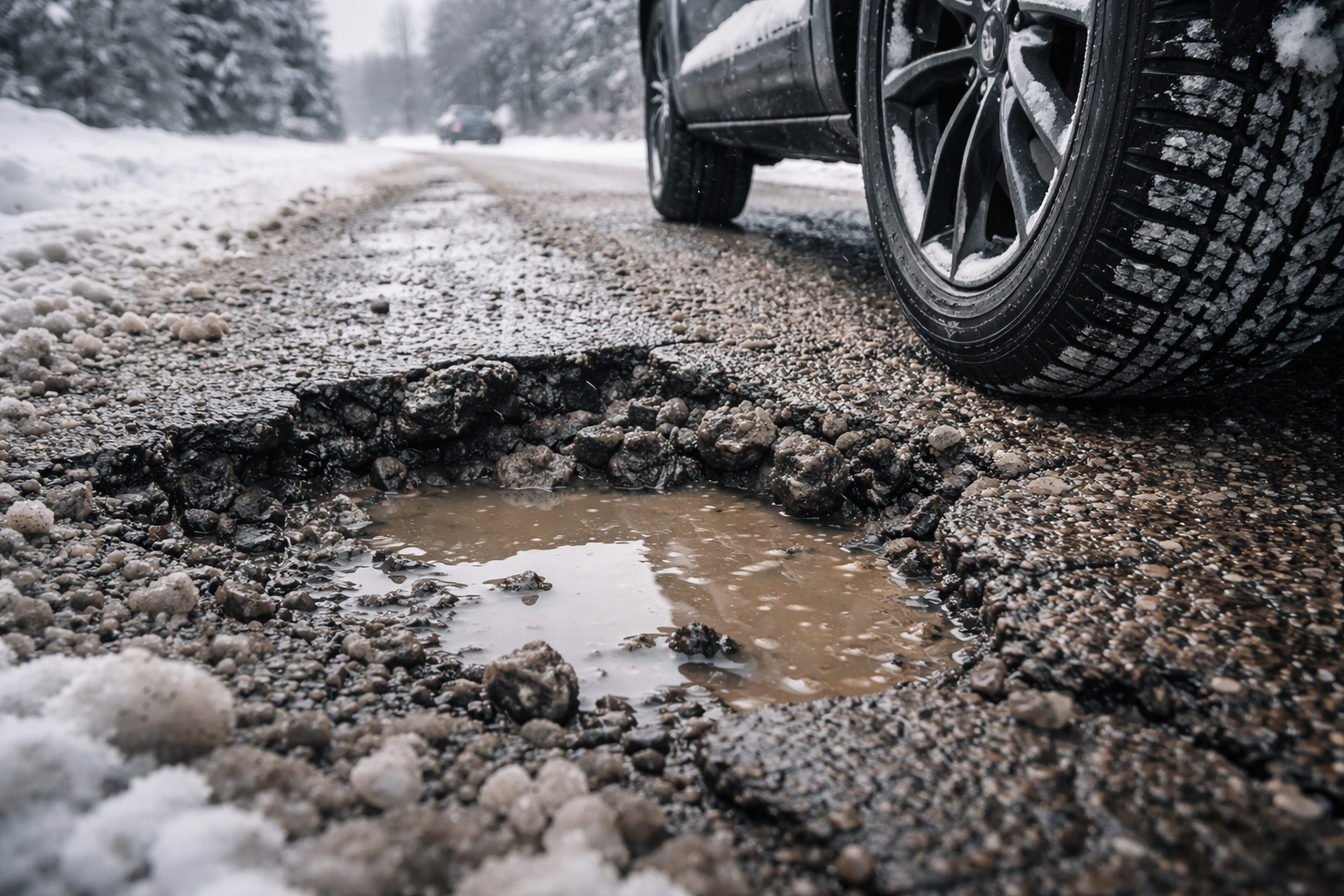
Spring road conditions across Simcoe County are some of the worst your vehicle faces all year. The freeze-thaw cycle that runs through our winters does exactly what you’d expect to asphalt: water gets in, freezes, expands, and when it thaws, the pavement breaks apart. What’s left behind is a minefield of craters that your suspension, tires, and steering components have to absorb, one hit at a time.
The issue we hear about most often when people come in after a rough stretch of road? Wheel alignment. Given how many cars we’re seeing with it knocked out of spec right now, it’s worth taking a few minutes to explain what alignment actually is, what a pothole does to it, and why it matters more than most people realize.
What Is a Wheel Alignment?
Your wheels are not meant to point in random directions. They are set to precise angles specified by your vehicle’s manufacturer, and those angles are what allow your tires to make full, even contact with the road. When everything is set correctly, your steering feels stable and predictable, and your tires wear evenly across the entire tread surface.
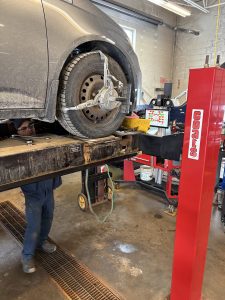
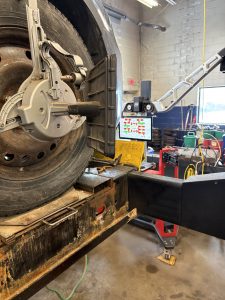
An alignment is the process of measuring those angles and adjusting them back to factory specifications using a calibrated machine. It is not a tire rotation. It is not a balance. It is its own service, and it is one of the most overlooked maintenance items we see.
What a Pothole Actually Does to Your Alignment
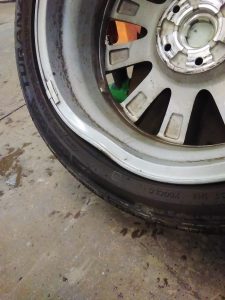
When your tire drops into a pothole and the sidewall takes the hit, the force that travels through the tire and into your suspension is significant. Most of the time you feel it as a jolt and move on. What you don’t feel is what may have shifted inside the steering and suspension components that connect your wheels to the rest of the car.
Tie rods, control arms, strut mounts, and the various bushings and joints that allow your suspension to move are all doing a job. A hard pothole hit puts sudden, sharp stress on those components in ways they weren’t designed to absorb. The alignment angles that were set to spec can shift. In some cases the hit is enough to bend a component outright.
You don’t have to hit a massive pothole to cause a problem. A series of smaller hits over a few weeks can gradually push alignment angles out of range just as effectively.
.
Signs Your Alignment Is Off
Here is what to watch for:
- Your steering wheel is off-centre when you’re driving straight. If the wheel is sitting at an angle while the car goes straight, that’s a clear signal.
- The car pulls to one side when you’re not actively steering. You shouldn’t have to work to keep a car tracking straight on a flat road.
- Uneven tire wear. One edge of a tire wearing down faster than the other is a classic sign of an alignment problem.
- A vibration in the steering wheel, particularly at highway speeds.
- The car feels less stable or more vague in corners than it used to.
Any one of these warrants a look. And if you hit something hard enough to make you wince, it is worth getting an alignment check even if you don’t notice any of the above right away. Some alignment issues develop gradually before they become obvious.
What Happens If You Don’t Fix It
This is the part people underestimate. An alignment that is off by even a small amount is wearing your tires unevenly every single kilometre you drive. Tires that wear unevenly wear out faster. A set of tires that should last 80,000 kilometres can be done in half that if the alignment is left unaddressed.
You are also putting additional stress on your steering and suspension components. Parts that are working against a misaligned load wear faster than they should. What starts as an alignment problem can become a more expensive repair if it’s left long enough.
And practically speaking, a car with compromised alignment handles differently. In an emergency situation where you need the car to respond precisely, that matters.
The alignment service itself is not expensive. Replacing a set of tires early, or a worn control arm, is. This is one of those cases where catching it early is clearly the better call.
How Often Should You Get an Alignment Check?
The standard recommendation is once a year, or any time you notice the symptoms above. We also recommend getting it checked after a significant impact, whether that’s a pothole, a curb hit, or a minor collision.
Spring is the right time to think about it in Barrie. After a full winter of rough roads and a season of potholes, a wheel alignment check is a practical part of getting your vehicle ready for the rest of the year. The Ontario Ministry of Transportation tracks road conditions across the province, but the reality on local streets speaks for itself this time of year.
If you’d like to understand more about what the service involves and what we’re looking at when we do it, our wheel alignment page walks through the full picture. As a certified NAPA AutoCare Centre, we back all our alignment work with a 24-month/40,000km warranty on parts and labour.
No Comments